 EN
EN


Choosing the right camping chair is one of those decisions that seems minor until you spend six hours sitting in the wrong one. Whether you are set up beside a lake, parked at a trailhead, or settled into a weekend festival, the chair you bring determines how much you actually enjoy the experience. Comfort is not a luxury in outdoor seating — it is the entire point, and understanding which features deliver it helps you make a smarter purchase from the start.
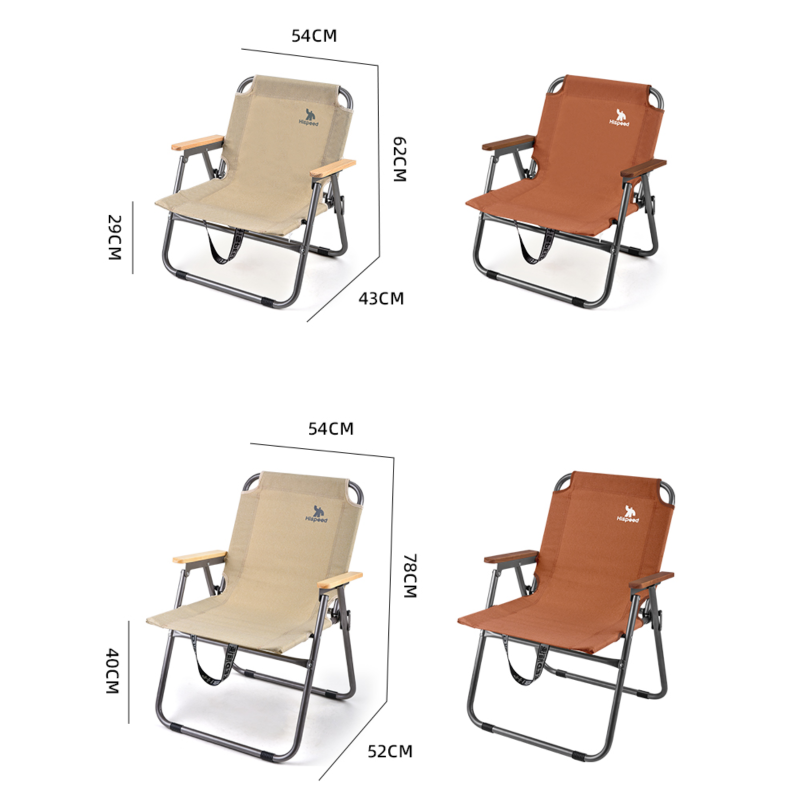
Not every camping chair is built the same way, and the differences go well beyond price. Seat depth, fabric tension, armrest height, back support angle, and frame rigidity all interact to create either a comfortable sitting experience or a fatiguing one. This article breaks down the features that matter most, explains why each one affects comfort in practical terms, and gives you the knowledge to evaluate any camping chair before you commit to it.
Seat Design and Body Support
Seat Depth and Width
The seat dimensions of a camping chair directly affect how your body weight is distributed over time. A seat that is too shallow pushes pressure onto the backs of your thighs, cutting off circulation and causing discomfort within the first hour. A seat that is too wide fails to support the sides of your hips, leading to lateral fatigue and poor posture. The ideal camping chair seat accommodates your hip width with a few centimeters of clearance on each side while providing enough depth to support your thighs without pressing into the knee area.
Most adults find that a seat width between 45 and 55 centimeters works well for general use. Seat depth in the range of 40 to 50 centimeters tends to suit a wide range of body types. When evaluating a camping chair, it is worth checking these measurements against your own proportions rather than assuming a standard size will fit. A chair that fits well distributes weight evenly across the seat surface, which is the foundation of sustained comfort during long outdoor sessions.
Seat Height and Ground Clearance
Seat height determines how easily you can sit down and stand up, and it also affects the angle of your knees and hips while seated. A camping chair set too low forces your knees above your hips, which compresses the lower back and becomes uncomfortable quickly. A chair set too high leaves your feet dangling or forces you to perch on the edge, which is equally tiring. The ideal seat height places your knees at roughly a 90-degree angle with your feet flat on the ground.
For most adults, a seat height between 40 and 50 centimeters from the ground works well. Some camping chair models offer adjustable leg heights, which is a useful feature if you plan to use the chair on uneven terrain or if multiple people of different heights will be sharing it. Ground clearance also matters for ventilation — a chair that sits too close to the ground traps heat underneath the seat, which becomes uncomfortable in warm weather.
Back Support and Recline
Backrest Height and Lumbar Support
The backrest of a camping chair is where most comfort differences become obvious after extended sitting. A low backrest supports only the lower back, which is fine for short sessions but leads to upper back and shoulder fatigue over time. A high backrest that extends to shoulder height or above allows the entire spine to relax, reducing muscular effort and making it possible to sit comfortably for hours. For camping trips where you plan to spend significant time at the campsite, a camping chair with a tall backrest is a meaningful upgrade.
Lumbar support — the slight forward curve in the lower portion of the backrest — is another feature worth examining. Without it, the lower back tends to round outward into a slouched position, which compresses the lumbar discs and causes aching over time. Some camping chair designs build lumbar curvature directly into the frame geometry, while others use padded inserts or adjustable straps. Either approach works, but the presence of some lumbar support is far better than none for anyone planning to sit for more than an hour at a stretch.
Recline Angle and Adjustability
The angle at which the backrest sits relative to the seat has a significant effect on comfort. A perfectly upright backrest is appropriate for eating or working at a camp table, but it becomes tiring for relaxed sitting. A slight recline of 10 to 15 degrees from vertical allows the back muscles to relax without putting the sitter in a fully reclined position that makes conversation or activity awkward. Many well-designed camping chair models set the backrest at this natural recline angle as a fixed position.
Adjustable recline is a premium feature found on some camping chair designs that allows the user to shift between upright and fully reclined positions. This is particularly useful for camping trips that involve both active campsite tasks and relaxed lounging. If you tend to use your camping chair for a single purpose — either relaxing or sitting upright — a fixed recline at the right angle is perfectly adequate. If your use varies, adjustability adds genuine value.
Frame Construction and Stability
Frame Material and Rigidity
The frame of a camping chair determines its structural stability, weight capacity, and long-term durability. Steel frames are heavier than aluminum but offer excellent rigidity and resistance to flex under load, which contributes to a solid, stable sitting feel. Aluminum frames reduce weight significantly while maintaining good strength, making them a popular choice for backpacking-oriented camping chair designs. The trade-off is that aluminum can flex slightly under heavier loads, which some users find less reassuring than the solid feel of steel.
Frame rigidity matters for comfort because a frame that flexes or wobbles under your weight forces your core muscles to compensate, which is tiring. A stable camping chair allows your body to fully relax because you are not unconsciously bracing against movement. When evaluating frame quality, look for thick-walled tubing, reinforced joint connections, and a weight rating that comfortably exceeds your own body weight. A camping chair rated well above its intended load will feel more solid and last significantly longer than one operating near its limit.
Leg Design and Ground Contact
The leg configuration of a camping chair affects both stability and suitability for different terrain types. Four-legged designs with a wide stance offer the most stability on flat, firm ground and are the most common configuration for general camping use. X-frame designs fold more compactly and work well on soft ground because the crossed legs distribute weight over a larger footprint, reducing the tendency to sink. Tripod designs are less common but offer excellent stability on uneven terrain.
Leg tips — the rubber or plastic caps at the bottom of each leg — are a small detail with a meaningful impact. Good leg tips grip the ground without slipping, protect the frame from corrosion, and prevent the legs from sinking into soft soil. On a camping chair intended for use on grass, dirt, or sand, wider leg tips or feet with a larger surface area perform noticeably better than narrow ones. This is worth checking before purchasing, especially if you camp frequently on soft or uneven ground.
Fabric Quality and Breathability
Fabric Tension and Seat Feel
The fabric used in a camping chair seat and backrest affects comfort in two ways: through its physical texture against the body and through the tension at which it is stretched across the frame. Fabric that is too loose sags under body weight, creating a hammock-like effect that looks comfortable but actually rounds the lower back into a poor posture position. Fabric that is too tight creates pressure points and feels rigid. The right tension allows the fabric to conform slightly to body contours while maintaining enough support to keep the spine in a neutral position.
Oxford cloth, particularly heavier grades like 600D Oxford, is a widely used material in quality camping chair construction. It offers a good balance of durability, resistance to abrasion, and surface texture that is comfortable against clothing. The weave density affects how the fabric feels under pressure — tighter weaves distribute load more evenly and resist deformation over time. When evaluating a camping chair, pressing down on the seat fabric with your hand gives a quick indication of tension and support quality.
Breathability and Temperature Management
Breathability is a comfort factor that becomes critical in warm weather. A camping chair with a solid, non-breathable seat surface traps body heat and moisture, leading to discomfort within 20 to 30 minutes in warm conditions. Mesh fabrics offer excellent airflow but sacrifice some structural support and durability compared to woven fabrics. Many camping chair designs use a combination approach, with a woven fabric seat for support and mesh panels in the backrest for ventilation.
For camping in mixed or unpredictable weather, a camping chair with moderate breathability and good moisture resistance is often the most practical choice. Fabrics treated with water-resistant coatings handle light rain and morning dew without becoming saturated, which extends the usable conditions for the chair. Drying time after exposure to moisture is also worth considering — a camping chair that dries quickly is ready to use again sooner and is less likely to develop mildew during storage.
Practical Features That Enhance Comfort
Armrests and Their Role in Comfort
Armrests are often treated as a secondary feature, but they contribute meaningfully to overall comfort in a camping chair. Properly positioned armrests allow the shoulders to drop and relax, reducing tension in the upper back and neck. Armrests set too high force the shoulders upward into a shrugged position, which becomes painful over time. Armrests set too low provide no support and are effectively useless. The ideal armrest height places the forearm parallel to the ground with the elbow bent at roughly 90 degrees.
Armrest material also matters. Hard plastic armrests are durable but can become uncomfortable under the forearm during extended use. Padded or fabric-covered armrests are more comfortable for long sessions. Some camping chair designs use armrests that fold down or detach, which is useful for compact storage but can introduce wobble or instability during use. Fixed armrests that are solidly integrated into the frame generally provide a more comfortable and reliable experience.
Portability Features and Their Comfort Trade-offs
Portability and comfort exist in a natural tension in camping chair design. The lightest, most compact camping chair options typically sacrifice seat depth, backrest height, and padding in order to reduce weight and packed size. This is an acceptable trade-off for backpacking where every gram matters, but for car camping or festival use where weight is not a constraint, choosing a more substantial camping chair delivers a noticeably better sitting experience.
Carry bags and straps affect how easy a camping chair is to transport between the car and the campsite. A well-designed carry bag protects the chair during transport and makes it easy to carry over a shoulder, which matters when you are also managing other gear. Some camping chair designs include integrated storage pockets or cup holders, which add convenience without significantly affecting comfort. These small additions improve the overall experience of using the chair at camp, even if they do not directly affect the sitting comfort itself.
FAQ
What seat height works best for most adults in a camping chair?
A seat height between 40 and 50 centimeters from the ground suits most adults well. This range places the knees at approximately a 90-degree angle with feet flat on the ground, which supports good posture and makes sitting down and standing up comfortable. If you are taller or shorter than average, look for a camping chair with adjustable leg height to fine-tune the fit.
Is a high backrest worth the extra weight in a camping chair?
For any camping trip where you plan to spend extended time sitting at the campsite, a high backrest is worth the additional weight. It supports the full length of the spine, reduces upper back and shoulder fatigue, and makes it possible to sit comfortably for several hours. For short hikes where the camping chair is used briefly, a lower backrest and lighter weight may be the better trade-off.
How does fabric type affect comfort in a camping chair?
Fabric type affects both the physical feel of the seat and its breathability. Heavier woven fabrics like 600D Oxford cloth offer good durability and support, while mesh panels improve airflow in warm conditions. The tension at which the fabric is stretched across the frame also matters — proper tension supports the body without creating pressure points or allowing excessive sagging that rounds the lower back.
Can a camping chair be both lightweight and comfortable?
Yes, but there are real trade-offs involved. Lightweight camping chair designs achieve their low weight by using thinner materials, smaller seat dimensions, and reduced padding, all of which affect comfort during extended use. For backpacking where weight is critical, these trade-offs are often acceptable. For car camping or base camp use, choosing a heavier but more fully featured camping chair delivers significantly better comfort without any meaningful penalty.